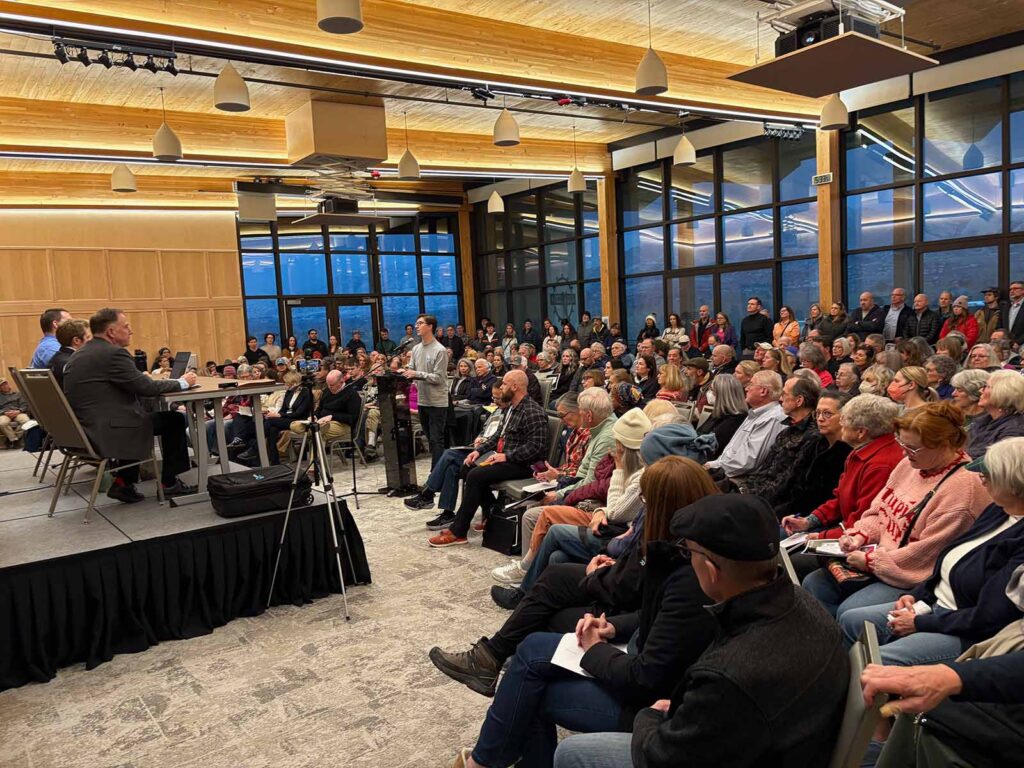
On January 28, 2026, residents from Canyon Rim and across Millcreek and surrounding areas showed up in strong numbers at Millcreek City Hall to make their voices heard at a public hearing hosted by the Utah Division of Air Quality (DAQ) regarding a proposed air quality permit for an aggregate mining operation in Parley’s Canyon.
Concerned neighbors packed the hearing room to express deep frustration with the prospect of increased dust, pollution, and public health risks tied to the proposed I-80 South Quarry project. Many attendees emphasized that air quality matters not just for today, but for the long-term health of their families, homes, and the community as a whole. One local resident posted afterward: “Incredibly grateful for the 300+ Utahns who showed up today at Millcreek City to speak out…” — capturing the sense of urgency and solidarity felt by those in attendance.
Speakers at the hearing did not mince words. Several voiced concern that the mining company’s approach—to initially seek a smaller permit that could later expand—felt like an effort to sidestep scrutiny and long-term environmental consequences. Others pointed out that the area’s existing air quality challenges make officials’ decisions on permits like this especially consequential for Millcreek residents and visitors alike.
Local leaders also participated, standing alongside neighbors to urge DAQ to put community health first. As one Millcreek resident summed up the mood of the evening: “No more destruction. No more dust. No mine in Parley’s Canyon.” Their comments reflect both a deep commitment to clean air and a neighborhood that refuses to stay silent when large projects could change the character of their community. Millcreek mayor Cheri Jackson delivered strong remarks demonstrating the city’s vehement opposition to the proposal.
Francis Lilly, Millcreek’s assistant city manager and planning director, pointed out many of the flaws in DAQ data while suggesting that the developer may be positioning itself for a much larger mining operation than that proposed.
Although the DAQ hearing provided an official forum for comment, the real story was the turnout—proof that Canyon Rim residents and their neighbors are engaged, organized, and ready to advocate for the environment and quality of life they care about deeply. Whether or not the permit is ultimately approved, this hearing showed one thing clearly: people are paying attention, and they won’t be quiet.